Teeth Health:What about Sugar?


What about Sugar ?

Sugar plays a harmful role in tooth decay. The bacteria that form together to become plaque use sugar as a form of energy. 

They multiply faster and the plaque grows in size and thickness. Some of the bacteria turn the sugar into a kind of glue that they use to stick themselves to the tooth surface. 

This makes it harder for the bacteria to get washed away with your saliva. 

Read more...

Teeth Health: What is causes a cavity


What is causes a cavity?

Your mouth is a busy place. Bacteria - tiny colonies of living organisms are constantly on the move on your teeth, gums, lips and tongue.


Having bacteria in your mouth is a normal thing. While some of the bacteria can be harmful, most are not and some are even helpful. 

Certain types of bacteria, however, can attach themselves to hard surfaces like the enamel that covers your teeth. If they're not removed, they multiply and grow in number until a colony forms. More bacteria of different types attach to the colony already growing on the tooth enamel. Proteins that are present in your saliva (spit) also mix in and the bacteria colony becomes a whitish film on the tooth. This film is called plaque, and it's what causes cavities.

Read more...

Teeth Growth and Development


Teeth Growth and Development

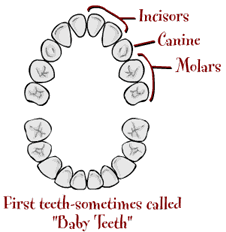
What's the difference between "baby" teeth and permanent teeth? At between six and ten months of age, most infants begin to get their "baby" teeth.


The Central Incisors (front middle teeth) usually come in first, and then teeth begin appearing on either side and work their way back to the second molars. By the time a child has reached three years old, most of the "baby" teeth should be present.

The process begins to repeat itself when the child is about seven years old. The Central Incisors fall out first and are replaced by permanent teeth. By the age
of 21, most people have all of their permanent teeth. 

"Baby" teeth are important because they hold the place for permanent teeth and help guide them into correct position. "Baby" teeth play an important role in the development of speech and chewing.

Read more...

ADD

About This Blog

Lorem Ipsum

  © Blogger templates Shiny by Ourblogtemplates.com 2008

Back to TOP